- CALL : (+1) 407-499-0530
- Main Office : (+1) 407-499-0530
NetSuite Licensing Services: Strategic Procurement & Configuration
Buying NetSuite is not like buying a subscription to a project management tool. It is an industrial-grade procurement process filled with opaque pricing structures, complex module dependencies, and “SuiteSuccess” packages that may not actually succeed for your specific business model.
Most implementations fail not because the software is bad, but because the licensing foundation was flawed from the start. You may have been sold “Enterprise” features when “Standard” would suffice, or perhaps you’re missing a critical API limit that cripples your integration strategy. We act as your independent ally, translating Oracle’s price list into a lean, effective roadmap for your business.
Why is buying NetSuite so difficult? Because the ecosystem is complex. A Direct Sales Representative is incentivized to close deals and maximize license value. They are salespeople, not engineers. We are engineers.
When you purchase NetSuite through a strategic consultant, you strip away the sales fluff. We approach licensing as a Technical Architecture project, not a sales transaction.
Why Use a Partner for Licensing vs. Direct Sales?
Retention vs. Quota
Direct sales reps live by quarterly quotas. Once the ink dries, they move to the next prospect. As your consulting partner, we live with the consequences of the license we recommend. If we underscope your storage or overcomplicate your edition, we are the ones who have to fix it. We are incentivized to get it right the first time.
Continuity of Care
When you buy Direct, your account is often handed off to a general support pool after implementation. With eMerge, the team that helps you buy the software is the same team that implements, optimizes, and supports it. You have "one throat to choke" for everything from billing questions to script errors.
Architecture-First Pricing
We reverse-engineer the license from your requirements. Instead of starting with a bundle, we map your workflows to specific modules. If a $50/month third-party tool handles shipping better than NetSuite’s native $500/month module, we will tell you to buy the third-party tool. A direct rep will rarely recommend a non-NetSuite solution.
Technical Validation vs. Sales Tactics
Sales teams are trained to sell add-ons; they aren't trained to debug scripts. A direct rep might insist you need the "Premium" tier to handle your projected order volume or an "Advanced" module to achieve a workflow. We review your actual throughput and functional needs to confirm these requirements.
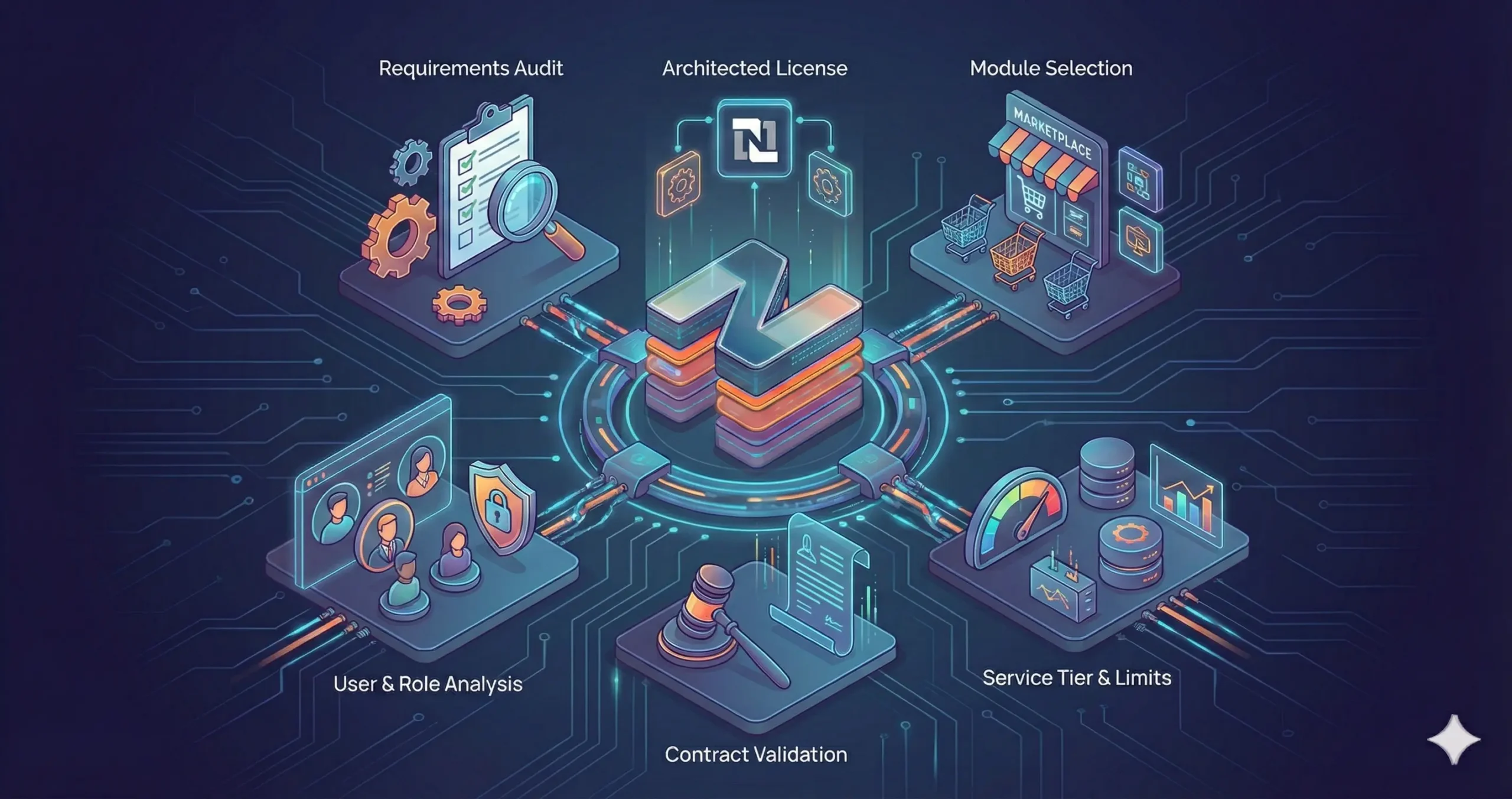
Our Process: The "License Architecture"
Phase 1: Requirements Audit
Before we discuss price, we discuss process. We audit your current record volumes (Transactions, Customers, Items) and your integration needs. This data dictates whether you need a Standard, Premium, or Enterprise Service Tier—a distinction that has nothing to do with features and everything to do with system performance.
Phase 2: Module Rationalization
NetSuite offers hundreds of modules. We ruthlessly cut what you don’t need. Do you really need Advanced Inventory, or just basic Bin Management? Is SuiteCommerce necessary, or does a Shopify connector make more sense? Do you need OneWorld now, or in Year 2?
Phase 3: The "Day in the Life" Proof of Concept
We do not rely on "canned" marketing demos that show perfect, unrealistic data. Once we understand your requirements, we configure a specific demonstration environment tailored to your business. We walk your team through a "Day in the Life" simulation—from entering a Sales Order to recognizing revenue—using workflows designed for your reality. This step allows you to physically see how the software handles your specific edge cases before you commit a single dollar.
Phase 4: The Blueprint & Purchase
We present a transparent "Bill of Materials" for your ERP. We walk you through every line item so you understand exactly what you are buying. Once approved, we facilitate the transaction, ensuring the contract terms protect your long-term interests.
Phase 5: Implementation & Build
Because we scoped the license correctly, the implementation phase begins immediately. There is no "discovery gap" where we realize the software you bought doesn't fit the business you run. Technical Note: We specialize in complex environments involving ODBC connectivity and SuiteScript 2.1 customizations. If your licensing needs to account for heavy API traffic or external data warehousing, we structure the contract to include the necessary SuiteCloud Plus licenses to prevent concurrency errors.
Why Work With eMerge?
The Suite Spot Expertise
24 Years in business.
100 Years of NetSuite-Specific experience.
100 + Successful Implementation
The Suite Spot Mix
We bring together all the NetSuite experts you need to succeed: Accountants, Developers, Architects, SME's, and Business Process Gurus.
Dedicated Resources
eMerge provides dedicated resources to all of our clients. Your eMerge team will grow with you over time and become an expert in your business.
NetSuite Licensing FAQ
The base license pricing and standard discounts are generally consistent across the channel. However, a partner often reduces the Total Cost of Ownership (TCO) by ensuring you don't purchase unnecessary modules or by structuring the contract ramp-up (tiering users over time) effectively.
Downgrading NetSuite (removing modules or reducing user counts) is notoriously difficult once a contract is signed. NetSuite contracts are typically annual or multi-year commitments. This is why "right-sizing" the initial purchase is critical. It is much easier to add a module later than to remove one.
No. NetSuite offers "Employee Center" licenses which are significantly cheaper. These are perfect for staff who only need to enter time, expenses, or approve purchase orders. We help you conduct a "Role Analysis" to swap expensive Full Licenses for cheaper Employee Center licenses where appropriate.
A User License allows a human to log in. A Service Tier dictates how much data your system can handle (storage and throughput). You can have 10 users but need an Enterprise Service Tier if those 10 users process millions of automated transactions via API.