

Prologue
Before the year 2000, the API Integration environment was a mess. The two options to connect API’S were SOAP and CORBA, and they were a disaster; with CORBA only slightly outdoing the SOAP method in complexity, difficulty, and rigidity. Applications were never on the same page and creating ways for them to interact was a guessing game. But then in 2000, a man named Roy Fielding had enough. You probably haven’t heard of Roy, but he’s impacted your life in more than one way by now. Roy and a group of colleagues set out to standardize the way API’s communicate. Read his landmark dissertation here!
He invented what he called the REST API. The REST API is uniform and modular. The method was so successful that many developers caught on, and soon it became the standard in API development. Now every API is speaking the same language and able to share data seamlessly. And the REST is becoming history…

So What is API Integration?
To understand API integration it is first important to understand exactly what an API does. API stands for Application Programming Interface. In technical terms, an API is a set of protocols and routines that allows someone to interact with a web-based application or web tool. In nontechnical terms, an API acts as the ears and mouth for an application.
A normal interaction with an API goes something like this. A user will use an interface, usually a web page, to create commands for the application. The API will then decipher that information into something the application will understand and relay that information to the application, the application will then generate a response that the API will then decipher into information the user can understand and send it back to the user.
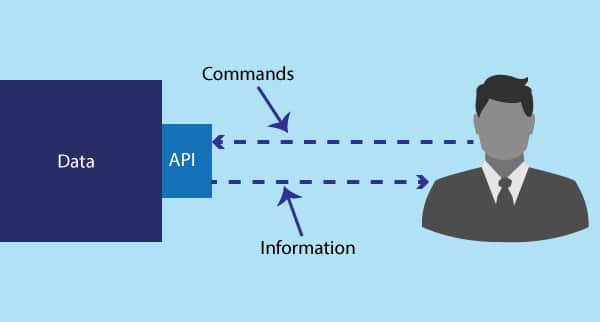
API Integration is the process of creating a way for two or more API’s to communicate and share data without the need for human intervention. API integration is an amazing concept that is now possible due to the standardization of API’s by Roy Fielding and the REST method. Roy created a “language” that all the API’s are able to speak.
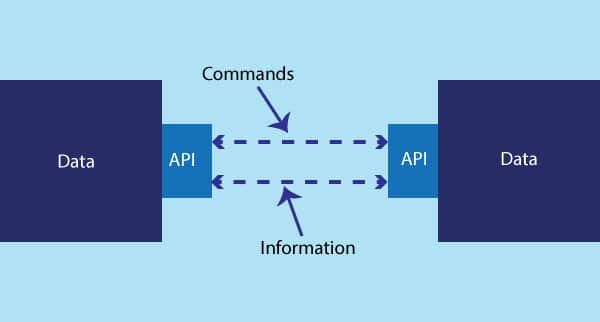
Using the protocols of each API, you can allow these software programs to share information, without the need for a user to manually manipulate or interfere with the data in any way.
A real life example would be if your Shopify website records a sale and then automatically shares that data with your NetSuite accounting software and updates your ledger. The API’s that gate-keep the information in Shopify and NetSuite are able to talk to each other and share important information and update other applications. Using the same integration, you can use NetSuite to update the inventory levels in your Shopify webstore so your customers know exactly how much of a product you have left in stock, without you ever having to make updates to Shopify yourself.
What Are the Benefits of API Integration?
The impact of API integration in the business community has been nothing short of revolutionary. The rise of SaaS applications that businesses depend on for organizational and data analysis has been compounded by the applications ability to communicate with each other.
Given the example above, the tangible benefits of API integration are quite clear. For most businesses, they mainly break down into three main benefits.
-
- Business Process Automation – As described in the example above, the information from one application was able to be automatically transferred to a different application. Before API integration, a paid employee would be needed to transfer this information. This could take a lot of time depending on the amount of data that is being transferred. With an integration, it takes a fraction of the time and requires no employee oversight at all.
- Error Reduction – Requiring humans to transfer the data inevitably result in errors. If the data is complex and abundant, the amount of inaccuracies would have to be represented in a percent. Even if its 99% correct accurate, 99% may not cut it with more delicate data sets. Computers do not get tired, have bad days, or make mistakes. They are as good as they have been programmed to be, and achieving 100% accuracy is achievable in their hands.
- Streamlined Communication/Reporting – If you’re data is being shared by your applications then it’s much easier to create robust reports that take into account all of the data sets possible. Better reporting leads to easier pattern recognition and hopefully better business decisions.
All of these benefits usually amount to the same thing for a business; Increased efficiency. API integration makes it so your critical data is less flawed, more accessible, and requires fewer people to manage.
How is API Integration Achieved?
Today there are multiple ways to achieve API integration, and they mostly depend on your unique needs as a business. The first being a custom, hand-written script from a developer with expertise in the API’s you’re trying to integrate. Custom integrations are still common today but as use-cases become popularized there became less reason to hand-write each integration application for each business. So queue the rise of “connector applications.” These applications are designed to be mass produced and provide a solution that usually integrates two popular software platforms. The third solution are API integration management platforms. These platforms are usually SaaS applications themselves but are entirely dedicated to managing and developing API integrations that connect other SaaS applications and databases. These platforms are a testament to how important the need for API integration has become.
API Integration and Management Tools
During the infancy of API integration, the only way you could get an integration was with the help of a developer and a hand-written script. Now that can still be done today but, as the popularity of integrations grew, there became a need to streamline this process. And this need was filled in the form of API integration tools that are stand-alone platforms. The most common API integration tools right now being Boomi, Jitterbit, and Mulesoft. These platforms are designed to build custom integration applications for your business need specifically, ideally without needing to write the application from scratch.
Regardless of your preference in tool, these tools have been proven to greatly improve the efficiency and capabilities of integration applications and made API integration more accessible and ubiquitous than ever before.
The API Integration Process
No matter what tool you use to achieve API integration there is a particular process that you must go through each time you wish to create one.
There are three essential parts of the API integration process. First, the process starts off with a look at your goals and business processes. Where are your pain points and how can integrating two or more software platforms alleviate these problems. It is important to note that software administrators and analysts usually know precisely how integration can save their business money and resources. Taking this into consideration, integration services typically are not something that needs to be sold, an internal process audit and simple cost analysis can quickly provide you with all the evidence you need to support integration.
Once you have your established your goals and finished your cost analysis, the development can begin. Developers and consultants will create a custom application that interacts with the software platforms API’s to create the new functionality desired to accomplish the business goals.
After the development is wrapped up, rounds of testing can begin to assure the users that the integration application is bug-free and performs as expected.
The Future of API Integration
By standardizing the way API’s communicate, Roy Fields has let a magical genie out of a bottle. The ubiquity, efficiency, and access to API integration are just now starting to yield results, and we expect this to only continue and solve ever more elaborate problems.
As the technology improves, integrations will continue to grow in popularity and become more streamlined. Most of the application integration platforms now offer graphic user interfaces that allow analyst or consultants, without degrees in computer science, to create integrations. Similar to how most eCommerce platforms now allow for top notch websites to be built without writing a single line of code, we can see that happening for API integration applications too.
Automation, advanced data analysis, and customized functionality will push the limits of what businesses around the world can achieve. Allowing them to create better solutions for consumer problems. In tomorrow’s world, there will be fewer reasons to say “that is not possible.

Related Posts

What is Dell Boomi? The 2023 Guide to a Leading IPaas
Contact us! eMerge Technologies has been creating integrations with the NetSuite platform for the past 15 years. And in that period, we have watched a number of innovations come on the market that makes integrations…

- Jan 06

What is Celigo? The Complete Guide for 2023
Contact us! What is Celigo? Celigo is a company on a mission to ‘enable independent best-of-breed applications to work together as one.’ Pretty straight-forward, but I’ll reiterate just the same. Celigo is a company dedicated…
- Dec 21